
Our Blogs
Blogs
/
Blog Details
The Role of Technology in Clothing Manufacturing
Comments
No Comments
Author
Balaji Aptex
Post Date
April 4, 2025

You can have anything you want in life if you dress for it.
In today’s fast-paced fashion industry, staying ahead requires more than just skilled craftsmanship—it demands cutting-edge technology.
At Balaji Aptex, we embrace innovation to deliver high-quality, sustainable, and efficient garment manufacturing solutions. From design to production, technology is revolutionizing how clothes are made, ensuring precision, speed, and sustainability. Let’s explore the key technological advancements shaping modern garment manufacturing.
1. Digital Design and Prototyping
Gone are the days of hand-drawn sketches and physical samples. Today, 3D design software (like CLO3D and Browzwear) allows designers to create virtual prototypes, reducing material waste and speeding up the approval process. These tools enable:
Realistic fabric simulation.
Instant design modifications.
Faster client feedback cycles.
At Balaji Aptex, we leverage these tools to bring your vision to life with unmatched accuracy and efficiency.
2. Automated Cutting Machines
Precision is critical in garment manufacturing. Automated cutting machines (such as Gerber or Lectra) use AI and laser technology to:
Minimize fabric waste.
Ensure flawless pattern alignment.
Cut hundreds of layers at once with perfection.
This technology not only boosts productivity but also supports our commitment to sustainable practices by optimizing material usage.
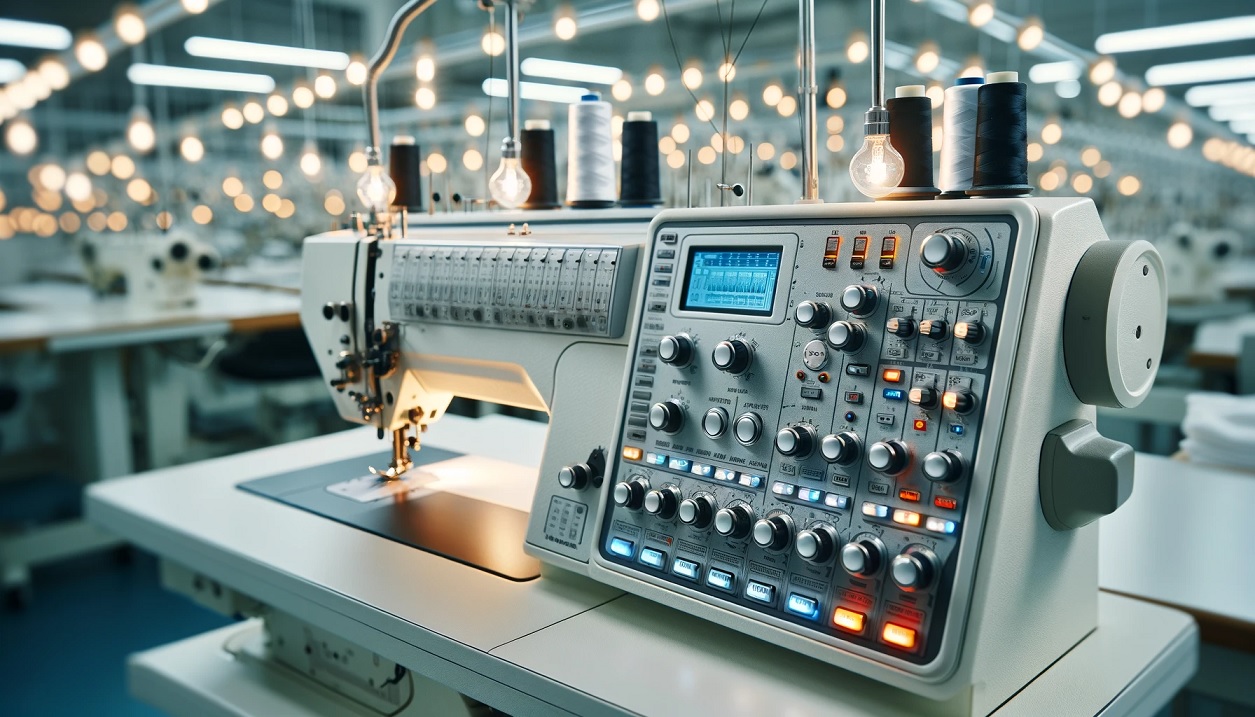
3. Smart Sewing and Robotics
Robotic sewing machines and automated stitching systems are transforming production floors. These advancements:
Reduce human error.
Increase production speed.
Maintain consistent quality across large orders.
Balaji Aptex integrates these technologies to meet high-volume demands without compromising on craftsmanship.
4. IoT and Supply Chain Transparency
Internet of Things (IoT) devices track every stage of production, from raw materials to finished garments. Benefits include:
Real-time inventory management.
Reduced delays and errors.
Enhanced transparency for ethical sourcing.
Our clients trust us for end-to-end visibility, ensuring ethical and efficient production.
5. AI and Predictive Analytics
Artificial Intelligence helps forecast trends, optimize workflows, and reduce overproduction. By analyzing data, we:
Predict fabric demand accurately.
Streamline production schedules.
Minimize deadstock and waste.
This proactive approach keeps Balaji Aptex agile in a competitive market.
Conclusion
Technology is no longer optional in garment manufacturing—it’s the backbone of innovation, sustainability, and efficiency. At Balaji Aptex, we blend tradition with cutting-edge tech to deliver high-quality, eco-conscious, and scalable garment solutions.
Ready to modernize your production process? Get in touch with us today!
📧 support@balajiaptex.com | 📞 (+91) 91794 14345
Related Blogs
Why Long-Term Relationships Matter in Garment Manufacturing
Manufacturing is about partnerships. Discover how long-term collaboration ensures quality and growth with Balaji Aptex.

The Hidden Costs of Choosing the Wrong Manufacturer
The fashion industry is evolving at lightning speed, driven by AI, sustainability, and hyper-personalization.

2 Responses